



Lebanese masses displaced, expats craving safe passage from Israeli bombs, bombs blasting city blocks, Palestinians resisting erasure, Green Berets holding Ecuador at bay, neoliberal naïfs opining, neocon crusaders crusading, and—oh, yes—megalomaniacs buffooning: These were the elements of several monologues and two books I published in 2007 and 2017. It’s deja vu all over again for this political poet who once hoped his words might power the one critical butterfly-flutter that tips the fascist juggernaut down the dustbin of history, yielding a more than trivial chance that peace, love, and human solidarity might prevail.
Is it too late for my works to work some magic?

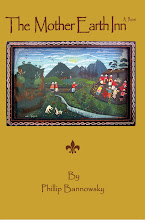
Eventually, after a harrowing ride through an Andean hailstorm, he comes to Vilcabamba, an indigenous town of weavers and musicians, and he bargains with the town elders to convert the old hacienda to an inn—the Mother Earth Inn.
Meanwhile, capitalist avarice, presidential buffoonery, and landowner skullduggery aim to displace those very Indigenous when a horrendous landslide dams up Vilcabamba’s river and water supply. Oil and neoliberalism, backed up with a healthy contingent of Green Berets, challenges him to take sides.

Of Otavalo and Lebanese parentage, Jacobo lands summer work at a Rehoboth Beach, Delaware Pizza joint, loses his pay and passport, cuts wings at a Georgetown poultry plant, scrambles to evade ICE, is rescued by an African American artist from Wilmington, cooks donuts on the graveyard shift at Dunkin’, gets nabbed by ICE and deported to Lebanon (where he’s never been—and just in time for the Israel-Hezbollah war), and is taken in by a Palestinian family. He is ultimately jailed at Guantánamo. While at age nine he’s elated to see a team of Greem Berets bailing from a helicopter, at Gitmo, he’s shown the movie Black Hawk Down and muses,
I used to love movies like this,
but nineteen US martyrs looked like Gitmo guards;
the thousand dead Somali looked like us.
Buy them at Bookshop. com

No comments:
Post a Comment